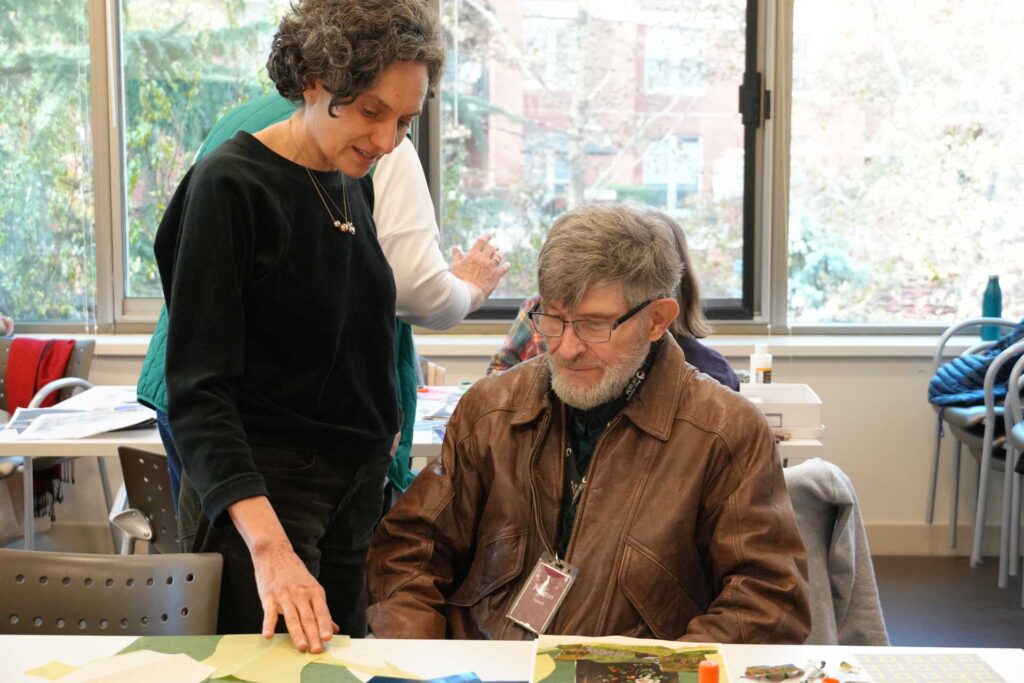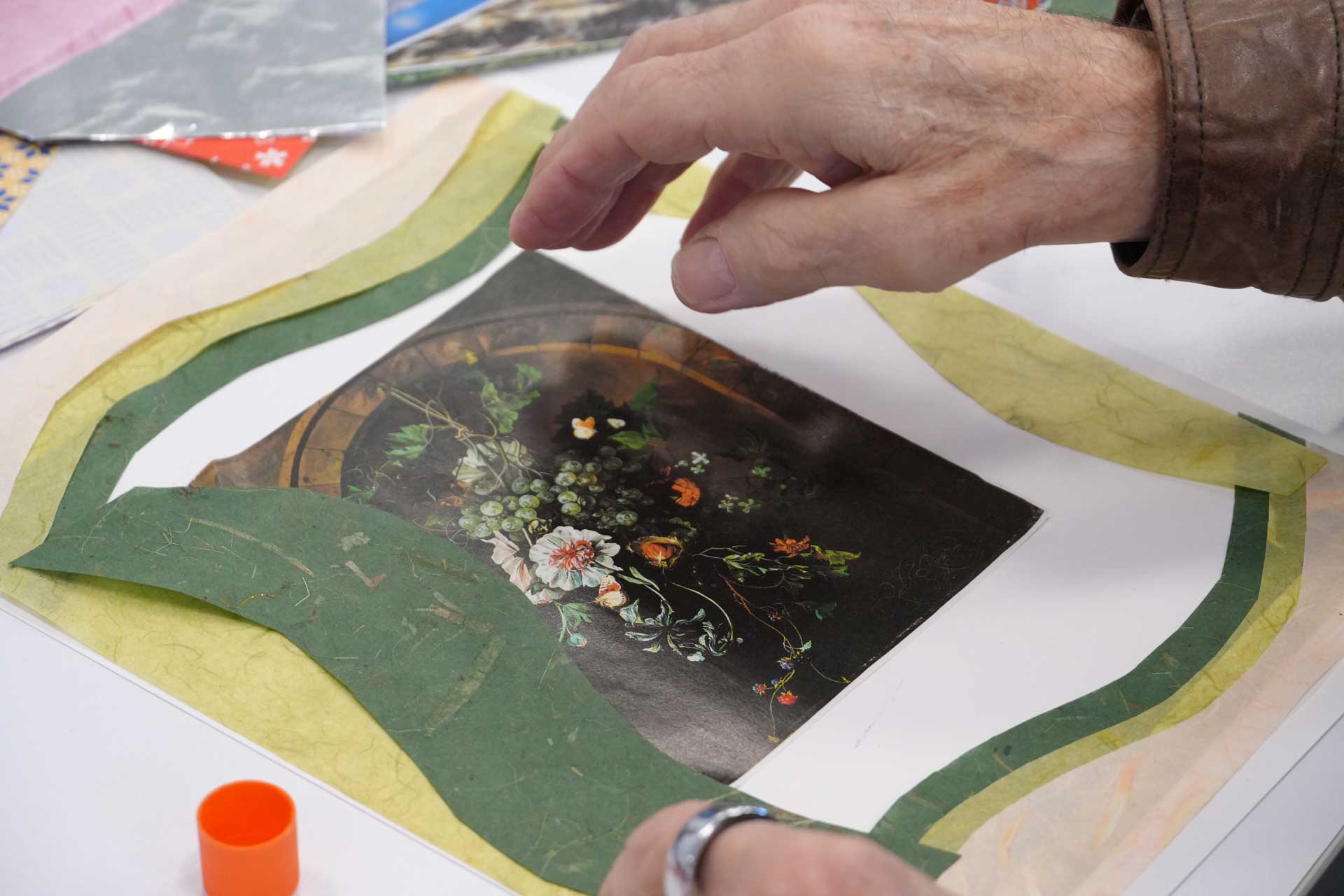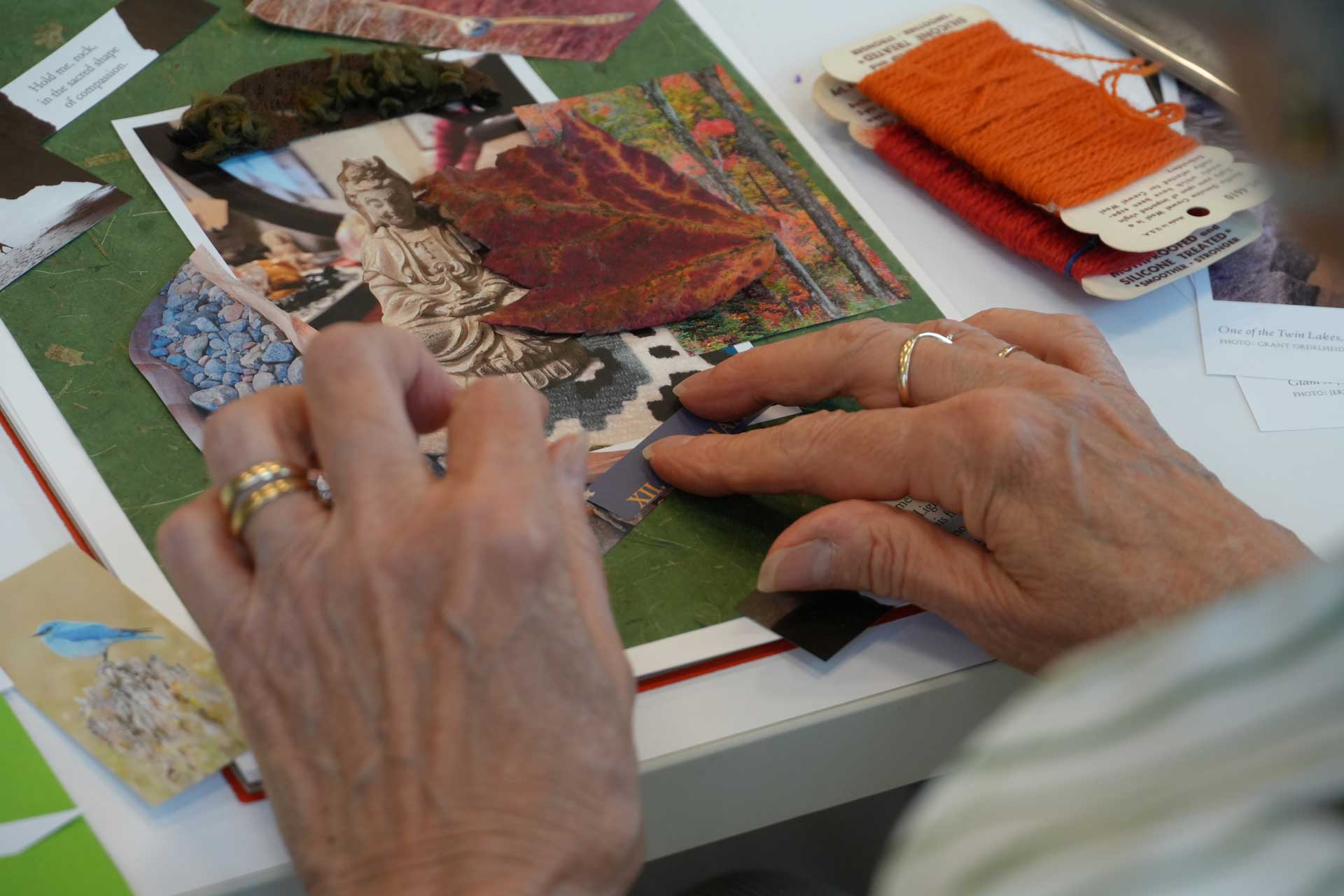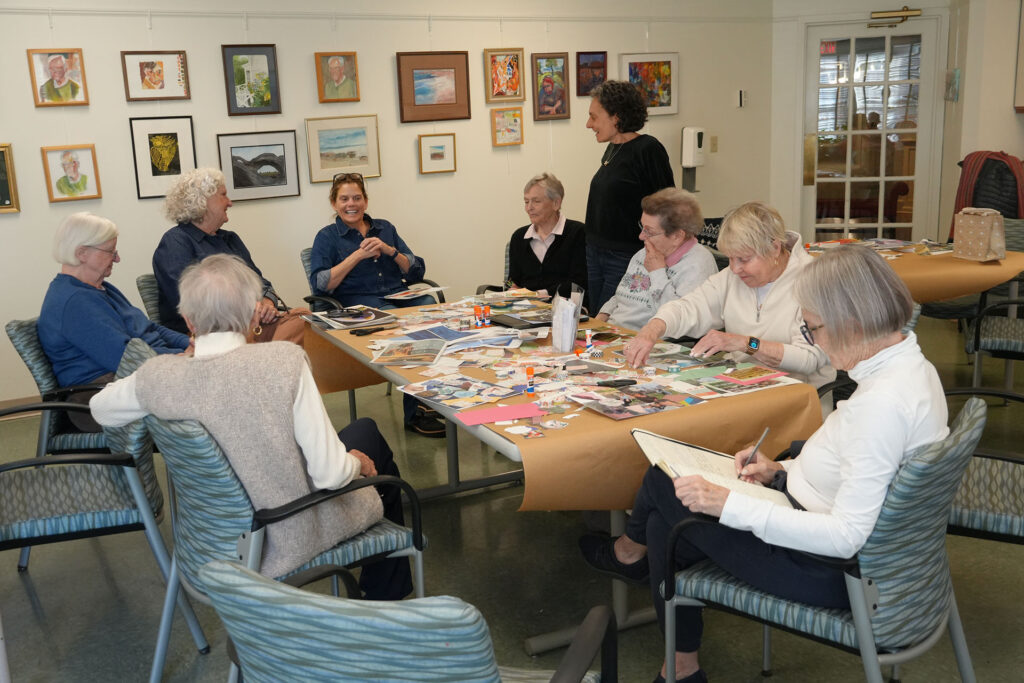
"Sarah and Suzanne's workshop created the space to feel and reflect."
Making art for Barbara and Margot is a way of living. But for those of us who aren’t artists, creative exploration easily gets lost from our daily lives.
Colleague and long-time friend Suzanne Reich and I wanted to use the impetus from the film to do something unconventional: to offer a creative workshop after the film. But how exactly do you get “grown-up” adults to take up glue sticks and bits of paper and not feel silly? Or worse, intimidated?
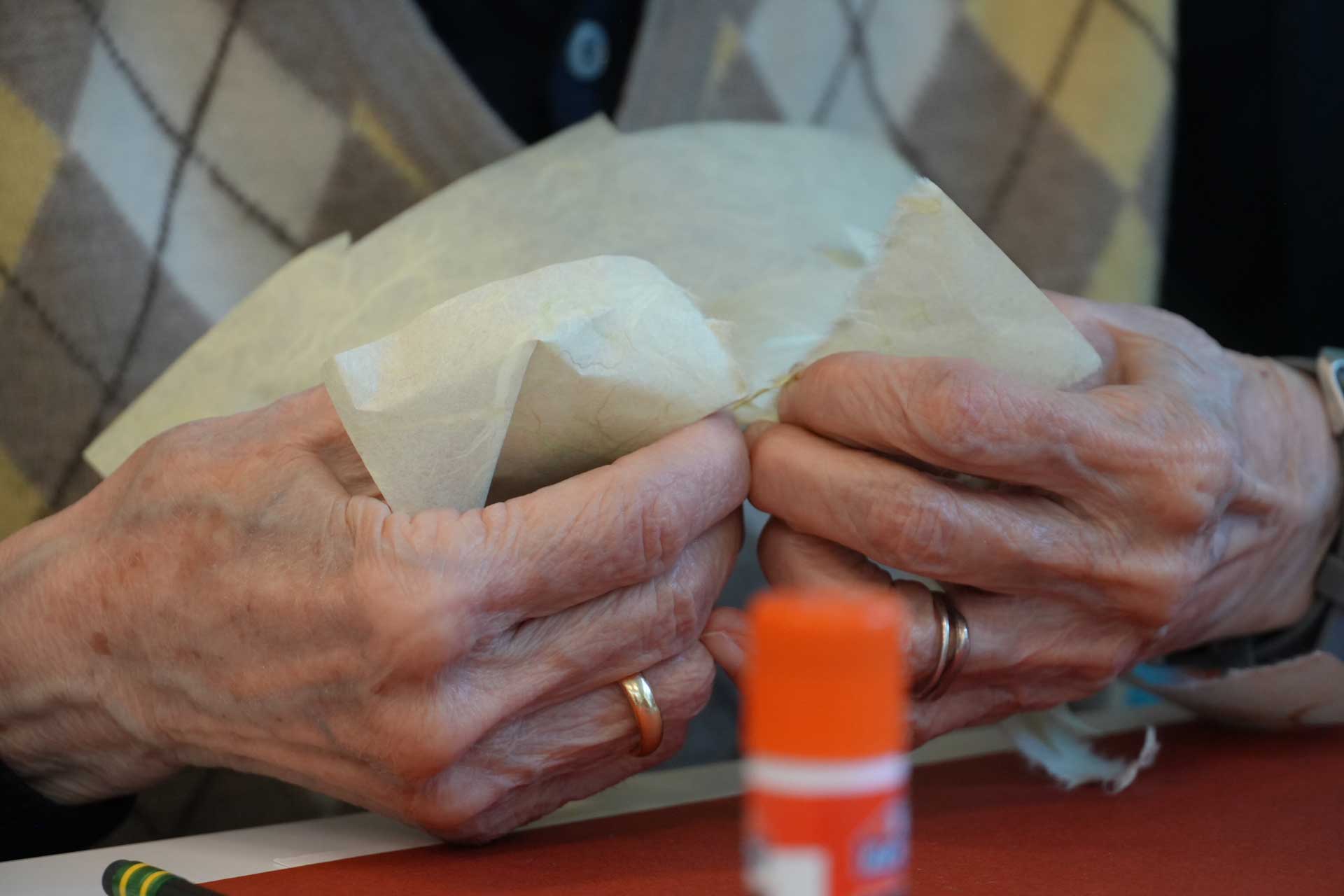
"I haven't picked up a glue stick in 30 years. "
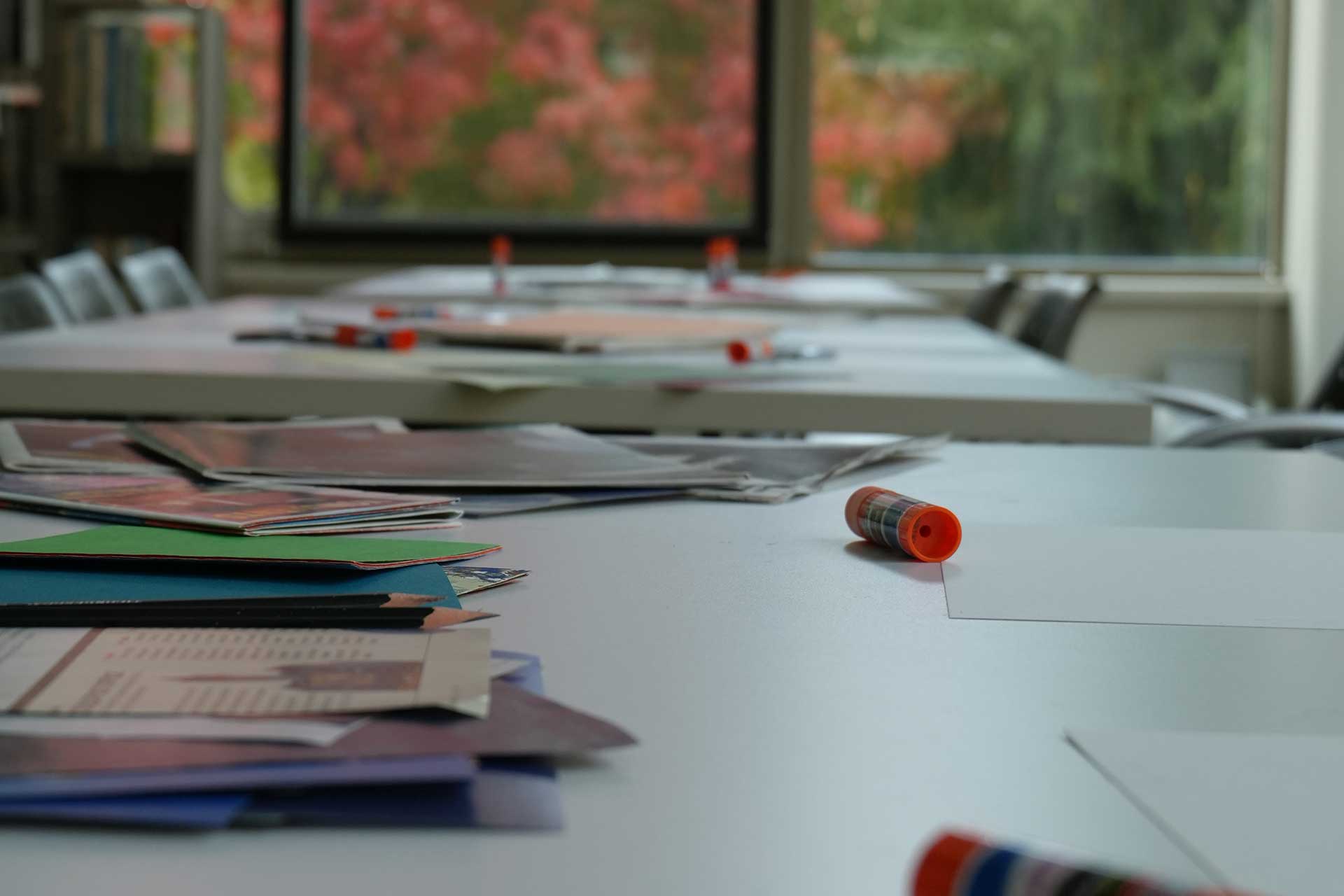
After the often intensely emotional film screening and Q&A, participants gather at tables covered with magazines, old calendars, photographs, and construction paper. Glue sticks and scissors lie waiting for use.
Each participant responds differently to the colorful spread. Some take their time to examine all the materials on offer; some begin cutting patterns excitedly before everyone is even seated. Others have brought their own personal materials: A wedding photo from half a century ago, a recent card from a dear friend.
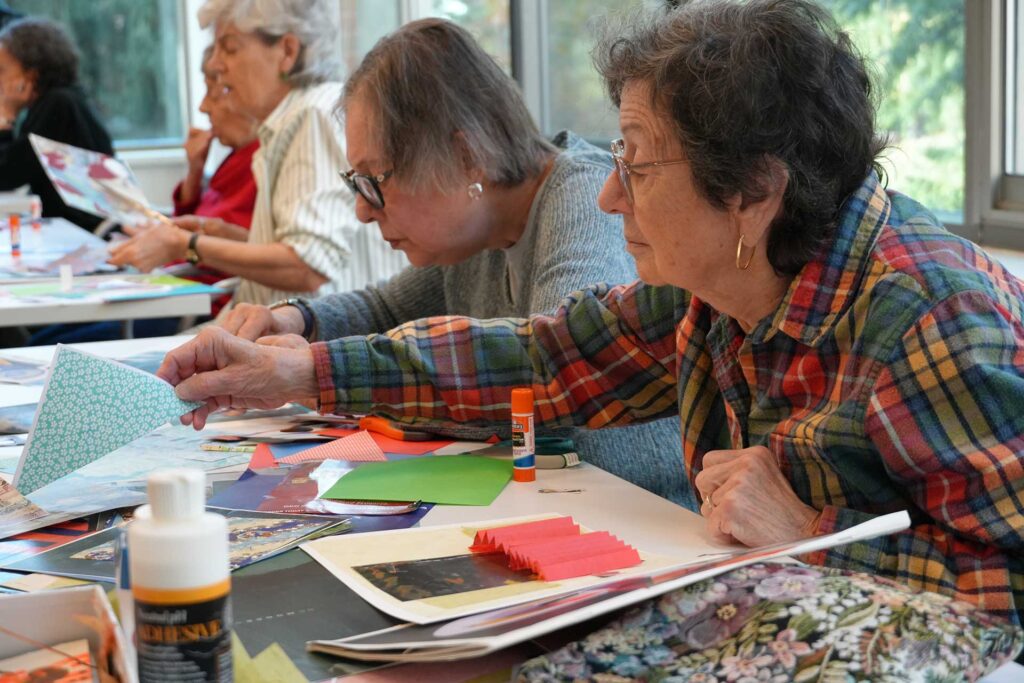
As we sit down at the tables, the experience of watching the film continues to work in us, as we continue to recall scenes which moved us and spoke to important themes in our own lives.
Some start talking about these moments immediately, others are quiet and take a while before they join in. People are remarkably open: One woman shares her fears of losing her mother to dementia, another wonders how to talk to her grandchildren about aging as letting go of life. There is a trust and openness inspired by the film which allows participants to share personal and sometimes difficult topics.
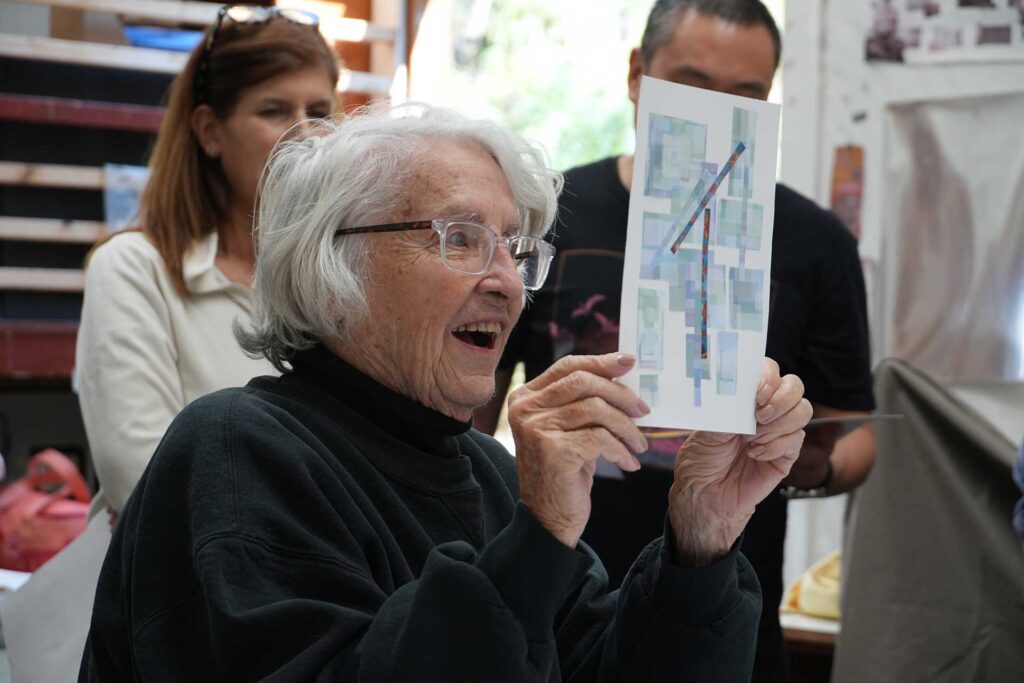
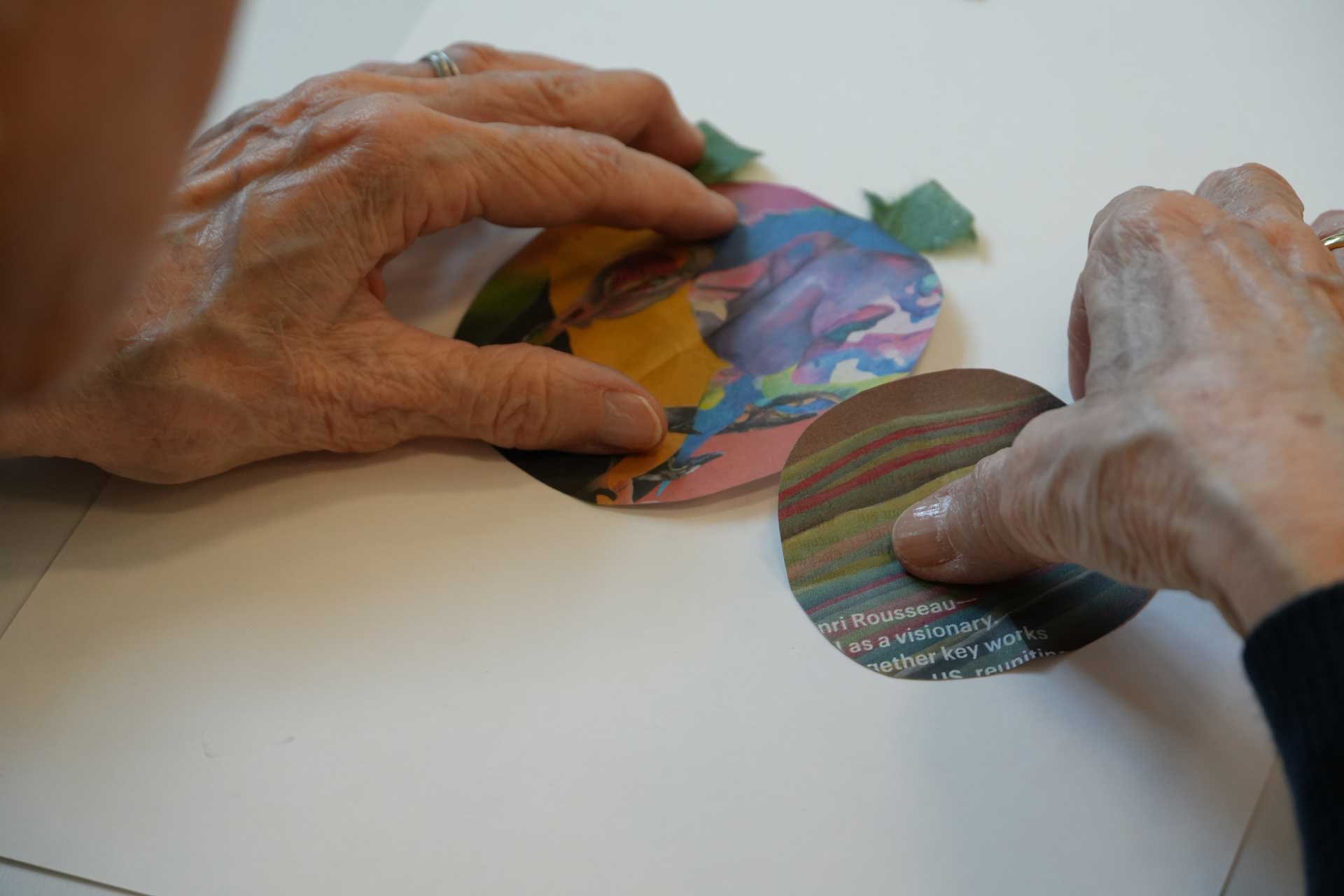
The conversation feeds the collage work, which in turn brings new impulses to our reflections: A younger man captures his impression of Barbara and Margot’s long lives by cutting out pieces of all the skies he can find on the table, making a mosaic of the skies he also hopes to see. A woman builds a mythical garden of intertwining flowers, crabs and lizards to portray her complex relationship to her own mother.
The creative workshop gives people space to process the film and inspires a dialogue with themselves which can continue far beyond the end of the workshop.